
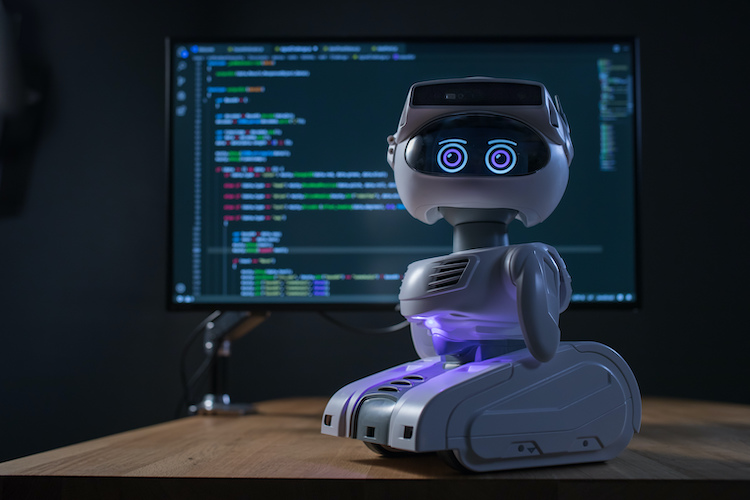
The market for AI desktop agents is exploding. Within just a few months, all major players have launched their own solutions that work directly on your computer — creating files, operating applications, and autonomously completing complex tasks. But which solution truly fits your business?
At CNEXT, we work with these technologies every day — we deploy Copilot solutions for Swiss businesses, build autonomous agents with OpenClaw, and use Claude and GitHub Copilot in our own engineering workflows. This hands-on experience feeds directly into this comparison: We evaluate the six most important AI desktop agents for the enterprise context and show which solution is the right choice for which use case.
Agentic AI Readiness Check
How ready is your organization for autonomous AI agents? Our free Readiness Check analyzes your organization across 6 key areas — with a personalized score and concrete recommendations.
The Players at a Glance
Before we dive into the details, here are the six systems we are comparing:
| Agent | Provider | Availability | Core Concept |
|---|---|---|---|
| Copilot with Tasks | Microsoft | Microsoft 365 Business/Enterprise | Agentic task automation within the Microsoft ecosystem |
| Claude Cowork Agent | Anthropic | Claude Pro / Team / Enterprise | Autonomous AI agent working directly on your desktop |
| Anthropic Computer Use | Anthropic | Claude API | Control of any software via screen interaction |
| OpenAI Operator / Desktop | OpenAI | ChatGPT Plus/Pro/Team | AI agent for web tasks and desktop interaction |
| GitHub Copilot (Agent Mode) | Microsoft / GitHub | GitHub Copilot Business/Enterprise | Coding agent with terminal access in VS Code and CLI |
| OpenClaw AI | Open Source / CNEXT | Self-Hosted | Autonomous open-source agent based on Claude for full computer control |
Microsoft Copilot with Tasks: The Enterprise Favorite
For companies already working within the Microsoft 365 ecosystem, Microsoft Copilot is the most natural choice. With the recently introduced Tasks feature, Copilot takes a decisive step forward: from a reactive assistant to a proactive agent.
Copilot Studio Introduction
Build custom AI agents for your Microsoft 365 environment
What Copilot Tasks Can Do:
- Automatic Execution: Copilot independently performs recurring tasks — e.g., creating daily summaries from emails and Teams chats.
- Deep Integration: Seamless access to Outlook, Teams, SharePoint, OneDrive, and the entire Microsoft Graph API.
- Scheduled Tasks: Tasks can run on a schedule, e.g., "Every Monday at 08:00, summarize my open action items."
- Context Understanding: Copilot knows your organizational structure, permissions, and data landscape.
Strengths:
- Unmatched integration with Microsoft 365
- Enterprise-grade security and compliance (data never leaves your tenant)
- Swiss data center available
- Familiar to end users already working with Microsoft
Weaknesses:
- Limited to the Microsoft ecosystem
- Tasks feature still in development (Preview)
- Additional licensing costs of CHF 30/user/month
- Less suitable for technical tasks (code, DevOps)
Claude Cowork Agent: The Autonomous Desktop Partner
Anthropic has taken a completely different approach with the Claude Cowork Agent. Claude works as an independent agent directly on your desktop — with access to files, browser, and applications.
Claude Cowork Agent: The Comprehensive Guide
Everything you need to know about Anthropic's autonomous desktop agent
What Claude Cowork Agent Can Do:
- Desktop Autonomy: Claude can create and edit files, conduct research, analyze data, and deliver results in various formats.
- Multi-App Workflows: Cross-application tasks — e.g., extracting data from a PDF, processing it in Excel, and sending it via email.
- Context Awareness: Claude learns your work style and preferences throughout the session.
- Code Execution: Can write and run Python scripts to process data.
Strengths:
- Platform-independent (macOS, Windows, Linux)
- Excellent text comprehension and analysis capabilities
- Flexibly deployable beyond the Microsoft ecosystem
- Strong reasoning capabilities for complex tasks
Weaknesses:
- No native integration with Microsoft 365
- Data processing via Anthropic servers (US-based)
- No Swiss data center yet
- Harder for IT departments to control and audit
Anthropic Computer Use: The API Variant
Computer Use is the API-based variant of Anthropic's desktop agent technology. Unlike the Cowork Agent, which comes as a ready-made application, Computer Use is a developer tool.
What Computer Use Can Do:
- Screen Control: Claude "sees" the screen (screenshots) and can control mouse and keyboard.
- Any Application: Any software visible on screen can theoretically be operated.
- Programmable Workflows: Developers can build custom automations via the API.
Strengths:
- Maximum flexibility for developers
- Can automate legacy software without APIs
- Programmatically controllable and integrable into custom systems
Weaknesses:
- Requires technical expertise to set up
- Slower execution due to screenshot-based interaction
- Error-prone when UI changes
- Not an end-user product — purely for developers and integrators
- Security concerns with screen access to sensitive data
OpenAI Operator & Desktop: The Generalist Approach
OpenAI has launched Operator as a web agent and supplements it with desktop features in the ChatGPT app. The focus is on broad accessibility and ease of use.
What OpenAI Operator Can Do:
- Web Automation: Operator independently navigates websites — books flights, fills out forms, researches information.
- Desktop Integration: The ChatGPT desktop app can analyze screen content and provide contextual assistance.
- File Processing: Upload and analysis of documents, images, and data directly in the chat.
Strengths:
- Very easy to use, low barrier to entry
- Broad knowledge base and good general capabilities
- Strong image processing and multimodal analysis
- Lower entry price (ChatGPT Plus from ~CHF 20/month)
Weaknesses:
- Web-based agent (Operator) still limited in reliability
- No deep enterprise integration
- Data processing on US servers
- Less suitable for complex enterprise workflows
- No granular access controls for IT teams
GitHub Copilot Agent Mode & CLI: The Developer Champion
Spec-Driven Agentic Engineering in VS Code
How to 5x your development speed with AI agents and specifications
GitHub Copilot has evolved into the most powerful AI solution for developers with Agent Mode in VS Code and Copilot CLI. With Subagents and Skills, Copilot goes far beyond code completion.
What GitHub Copilot Agent Mode Can Do:
- Autonomous Development: Copilot plans, implements, and tests features independently.
- Terminal Access: Can execute commands, start builds, and analyze logs.
- Multi-File Editing: Edits multiple files simultaneously for coherent changes.
- Subagents: Can delegate subtasks to specialized agents.
Strengths:
- Deepest IDE integration on the market
- Understands project context and codebase
- Enterprise-grade security via GitHub Enterprise
- Skills system for custom extensions
Weaknesses:
- Purely focused on development — not a general productivity agent
- Requires VS Code or a compatible IDE
- Not relevant for non-developers
- Licensing costs in addition to GitHub Enterprise
Microsoft 365 Integration Factors in Detail
For organizations within the Microsoft ecosystem, integration with Microsoft 365 is often the decisive criterion. Here we show how deeply each agent works with individual Microsoft 365 services:
| Microsoft 365 Service | Copilot Tasks | Claude Cowork | Computer Use | OpenAI Operator | GitHub Copilot | OpenClaw AI |
|---|---|---|---|---|---|---|
| Outlook (Email) | Natively integrated — reads, writes, and summarizes emails | No direct access — only via copy/paste or export | Can operate Outlook UI (slow, error-prone) | Can automate Outlook Web via browser | No integration | Can autonomously control Outlook UI (desktop-based) |
| Microsoft Teams | Native — read chats, summaries, meeting notes | No access | Can control Teams UI (screenshot-based) | No direct access | No integration | Can control Teams UI and send messages |
| SharePoint & OneDrive | Native — search documents, read, use metadata | Files only analyzable via manual upload | Can navigate SharePoint UI | Can open SharePoint Online via browser | Can access repos, not SharePoint | Can navigate SharePoint UI and manage files |
| Microsoft Graph API | Full access to all Graph endpoints | No access | No API access (UI only) | No access | No direct Graph access | Can access Graph API via custom scripts |
| Power Platform | Can trigger Power Automate flows and read Dataverse data | No access | Can operate Power Apps UI | No access | No integration | Can autonomously operate Power Apps UI |
| Copilot Studio | Seamless extension — build custom agents and combine with Tasks | Not compatible | Not compatible | Not compatible | No integration | Not compatible |
| Entra ID (SSO) | Uses existing Entra ID authentication | Own authentication (no SSO) | Own authentication | Own authentication | SSO via GitHub Enterprise possible | Own authentication (self-hosted) |
| Compliance & DLP | Fully integrated with Microsoft Purview and DLP policies | No Microsoft compliance integration | No integration | No integration | Partially via GitHub Advanced Security | Own compliance (full data control) |
| Audit Logs | All actions visible in Microsoft 365 Audit Log | Own logging — not in M365 Audit Log | No audit trail in M365 | No audit trail in M365 | Audit via GitHub Enterprise | Own logging on self-hosted infrastructure |
What Does This Mean in Practice?
Copilot Tasks is the only agent that operates natively within the Microsoft 365 security boundary. This means:
- Data never leaves your tenant
- Existing permissions (who sees what) are respected
- IT admins retain full control over Conditional Access policies
- All actions are traceable in the central audit log
The other agents operate outside the Microsoft ecosystem and can only access Microsoft 365 data through workarounds (browser automation, file export, APIs). This has direct implications for data privacy, compliance, and governance — particularly relevant for regulated industries.
OpenClaw AI: The Open-Source Alternative
Running OpenClaw Securely
Enterprise guide for safe AI agent deployment
Beyond the major commercial providers, OpenClaw AI offers a fascinating open-source alternative. OpenClaw is based on Anthropic's Claude models and enables fully autonomous computer control — hosted on your own infrastructure.
How OpenClaw Works
OpenClaw uses Anthropic's Computer Use protocol but packages it into a standalone, self-hosted environment. The agent gets access to a full virtual desktop (Linux-based) and interacts with it via screenshots and simulated mouse/keyboard inputs.
The typical workflow:
- 1Define the task: You describe in natural language what the agent should do — e.g., "Research the current prices of our 5 main competitors and create a comparison table."
- 2Planning: OpenClaw breaks the task into subtasks and plans the sequence of actions.
- 3Execution: The agent opens the browser, navigates to websites, extracts data, switches to a spreadsheet application, and creates the overview.
- 4Result: The finished file is saved and you are notified.
What Sets OpenClaw Apart
Unlike Copilot or Claude Cowork, OpenClaw does not work within a chat interface — it controls a complete computer. This means:
- Any software is accessible: Whether SAP, legacy ERP systems, proprietary industry software, or web applications — OpenClaw can operate anything that has a graphical interface.
- No API required: While Copilot relies on the Microsoft Graph API and Claude on file uploads, OpenClaw can interact directly with any application.
- Multi-agent orchestration: Multiple OpenClaw instances can work in parallel and assign tasks to each other.
Use Cases in Detail
| Area | Example Workflow | Complexity |
|---|---|---|
| Accounting | Extract receipts from emails, enter them in Bexio/accounting software, suggest account assignments | Medium |
| Customer Support | Read support tickets, research in knowledge base, create draft responses | Medium |
| Market Research | Monitor competitor websites, track price changes, generate reports | Low |
| Email Management | Prioritize inbox, track follow-ups, draft routine responses | Low |
| Software Testing | Perform UI tests, document screenshots, log bugs in Jira/DevOps | High |
| Data Entry | Read PDFs, convert data to structured formats, perform validations | Medium |
Security Architecture
Since OpenClaw controls a complete desktop, the security architecture is critical:
- Isolated Environment: OpenClaw runs in a dedicated VM or container — completely separated from production systems.
- Network Segmentation: Firewall rules (UFW) restrict access to defined targets.
- Kill Switch: The agent can be stopped at any time if it shows unexpected behavior.
- Audit Logging: All actions (screenshots, clicks, keystrokes) are logged and traceable.
- Token Authentication: API access is protected via secure tokens.
Strengths:
- Full control over data and infrastructure (self-hosted)
- Maximum flexibility — can automate any software with a GUI
- No vendor lock-in — open source
- Can work with various LLMs (Claude, GPT, Grok, open-source models)
- Ideal for legacy systems without modern APIs
- Multi-agent workflows for parallel task processing
Weaknesses:
- Requires dedicated infrastructure and technical setup
- Security risks with improper configuration (isolated sandbox required)
- No official enterprise support — community-driven
- Slower execution than native API integrations
- Error-prone when UI changes in target applications
- Steep learning curve for non-technical users
When OpenClaw Is the Right Choice
OpenClaw is particularly valuable in scenarios where commercial agents reach their limits:
- 1Legacy Automation: Your core software has no API? OpenClaw can still work with it.
- 2Data Sovereignty: Sensitive data must not leave your infrastructure? OpenClaw runs completely on-premise.
- 3Exploratory AI Projects: You want to understand what autonomous agents can achieve before investing in Copilot licenses.
- 4Niche Workflows: Highly specialized processes that no commercial agent covers.
The Big Comparison: Which Agent for Which Use Case?
| Criterion | Copilot Tasks | Claude Cowork | Computer Use | OpenAI Operator | GitHub Copilot | OpenClaw AI |
|---|---|---|---|---|---|---|
| Ease of Use | ★★★★★ | ★★★★ | ★★ | ★★★★★ | ★★★ | ★★ |
| Enterprise Readiness | ★★★★★ | ★★★ | ★★ | ★★ | ★★★★ | ★★ |
| Flexibility | ★★★ | ★★★★★ | ★★★★★ | ★★★ | ★★★ | ★★★★★ |
| Data Privacy (CH) | ★★★★★ | ★★★ | ★★★ | ★★ | ★★★★ | ★★★★★ |
| Coding Capabilities | ★★ | ★★★★ | ★★★ | ★★★ | ★★★★★ | ★★★★ |
| Automation | ★★★★★ | ★★★★ | ★★★★ | ★★★ | ★★★★ | ★★★★★ |
| Cost | CHF 30/User | CHF 20-100/User | API-based | CHF 20/User | CHF 19-39/User | Infrastructure + API |
Agentic AI Readiness Check
How ready is your organization for autonomous AI agents? Our free Readiness Check analyzes your organization across 6 key areas — with a personalized score and concrete recommendations.
Our Recommendation for Businesses
For Microsoft 365 Organizations: Copilot with Tasks
If you already work within the Microsoft ecosystem and most of your productivity happens in Outlook, Teams, and SharePoint, Copilot with Tasks is the clear first choice. The integration is seamless, data stays in your tenant, and the Swiss data center ensures compliance.
For Knowledge-Intensive Professions: Claude Cowork Agent
Lawyers, consultants, analysts, and researchers benefit most from the Claude Cowork Agent. The superior reasoning capabilities and flexibility when working with various document types make Claude the ideal knowledge worker assistant.
For Development Teams: GitHub Copilot Agent Mode
For your engineering teams, there is no better solution than GitHub Copilot with Agent Mode. The IDE integration, terminal access, and subagent system massively accelerate development.
For Experimenters and Data Sovereignty: OpenClaw AI
Organizations that want to maintain full control over their data or experiment with autonomous agents will find OpenClaw AI to be the ideal solution. Self-hosted on your own infrastructure, all data stays under your control — perfect for regulated industries, legacy automation, and innovation labs.
The Hybrid Approach: The Reality
In practice, we recommend a hybrid approach to our clients: Copilot Tasks for daily office work, GitHub Copilot for development, Claude for specialized analysis tasks, and OpenClaw for automations that require maximum data sovereignty. The agents complement each other and together cover the full spectrum.
Conclusion: The Future is Agentic
The trend is clear: AI agents on the desktop are no longer a novelty but are becoming standard tools in everyday work. Microsoft has the advantage of deep ecosystem integration with Copilot Tasks, Anthropic scores with flexibility and reasoning, and OpenAI convinces through accessibility.
For businesses, data privacy remains a key decision criterion. Microsoft currently leads here with the Swiss data center. But the market is evolving rapidly — and CNEXT is here to help you find the right strategy for your organization.
Latest Developments (March 2026)
| Date | Provider | News |
|---|---|---|
| Feb 2026 | Microsoft | Copilot Tasks General Availability — Tasks are now available to all Microsoft 365 E3/E5 customers. New features: Scheduled Tasks, multi-step workflows, and Power Automate integration. |
| Feb 2026 | Anthropic | Claude Cowork Agent 2.0 — New version with improved desktop integration, native file system access, and extended context window (200K tokens). |
| Jan 2026 | OpenAI | Operator Pro Launch — OpenAI extends Operator with more complex multi-step web automations and introduces an Enterprise version with SSO support. |
| Jan 2026 | GitHub | Copilot Agent Mode GA — Agent Mode is now available to all GitHub Copilot Business and Enterprise users. New Skills platform for custom extensions. |
| Dec 2025 | Microsoft | Copilot Studio Agents in Teams — Custom AI agents can now be deployed directly in Microsoft Teams as chat bots. |
| Dec 2025 | Anthropic | Computer Use API v2 — Improved speed and accuracy for screen control. New support for drag-and-drop actions. |
| Nov 2025 | OpenAI | ChatGPT Desktop 2.0 — New design with screen sharing feature that enables contextual assistance for any desktop application. |
| Nov 2025 | GitHub | Copilot Subagents — Agents can delegate subtasks to specialized sub-agents that work in parallel. |
Official Provider Links
- Microsoft Copilot — Official Copilot page with feature overview
- Microsoft Copilot Studio — Build custom AI agents
- Claude by Anthropic — Claude models and capabilities
- Anthropic Computer Use — API documentation for Computer Use
- OpenAI Operator — OpenAI's autonomous web agent
- ChatGPT Desktop App — Desktop app for macOS and Windows
- GitHub Copilot — AI assistant for developers
- GitHub Copilot in VS Code — Agent Mode documentation
- OpenClaw AI — Autonomous open-source agent by CNEXT
Further Reading
- Copilot Studio Introduction
- Claude Cowork Agent: The Comprehensive Guide
- GitHub Copilot CLI Introduction
- Introducing AI Agents in Your Business
- Spec-Driven Agentic Engineering in VS Code
- Running OpenClaw Securely: Enterprise Guide
- OpenClaw + Microsoft 365: Agent Integration
- Claude Cowork Agent vs. Microsoft Copilot
- Agentic AI Readiness Check — How Ready Is Your Organization?
- Our Copilot Services